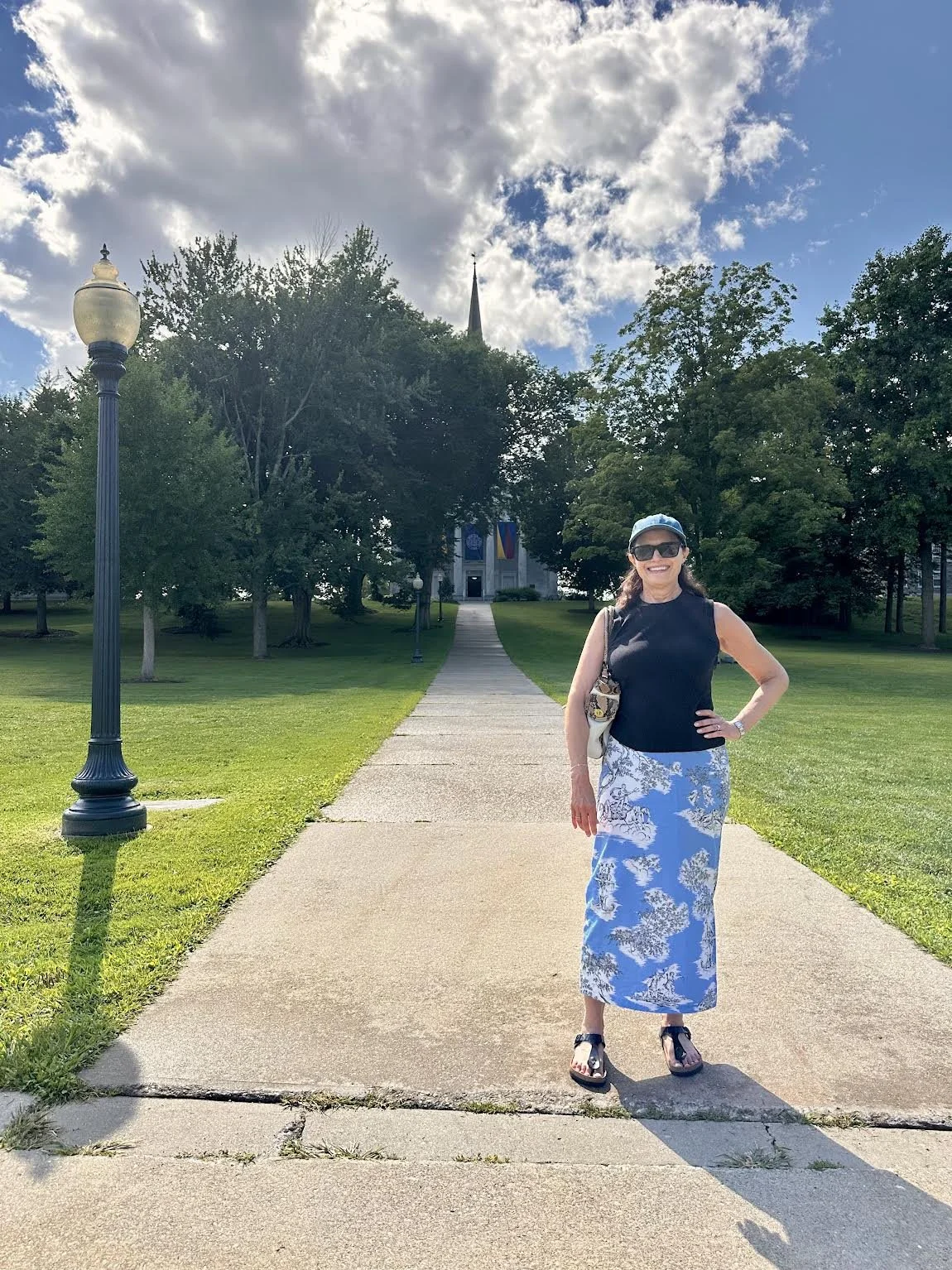
One of the joys of being a college counselor is visiting colleges. Sometimes it’s for the first time or, as was the case on a recent trip to Vermont, it’s a college (or two) where I have a personal affiliation. I used to teach English at both Middlebury College and the University of Vermont (UVM), and at Middlebury I was also on the Admissions Staff of the Bread Loaf Writers’ Conference. I hadn’t been on either campus for a few years so it was fun to get caught up on the innovative programming happening at both schools.
Middlebury: Small School with a Large Profile
Middlebury College is the quintessential New England Liberal Arts college, but with a global outlook. Acclaimed for its language programs, it offers intensive summer Language Schools in twelve languages, which were just wrapping up on the day I visited. It also operates its own extensive network of Study Abroad programs instead of relying on external third-party providers as many schools do. More than half the junior class studies abroad, integrating into the local community across more than 40 countries and 90 different universities. With international students making up approximately 11% of the student body and representing 61 countries, Middlebury is an excellent choice for students seeking a global perspective and a small college feel.
Fostering Innovative Problem Solving
Middlebury also offers several innovative and experiential learning programs designed to combine traditional liberal arts education with real-world problem solving. This blend of tradition and innovation really does define Middlebury and make it stand out. Their STEM Innovation Program for example, a creative and interdisciplinary program, challenges teams of students to design and implement a technological solution to a real-world problem. Young entrepreneurs can receive funding and mentorship through the Middlebury Innovation Hub, an incubator workspace. And long renowned for the nation’s first undergraduate environmental studies program, Middlebury is also a leader in campus sustainability initiatives.
With its own ski mountain and cross country ski center and its bucolic small-town setting, Middlebury can feel idyllic, but its faculty and students are dynamically engaged in today’s most pressing issues, offering students a richly rewarding college experience.
UVM: Making the Most of Its Location
As the state’s flagship university and a major research university (R1), UVM makes the most of its location in the heart of the Champlain Valley. Known as the “bread basket” of the state for its deep-rooted agricultural history, the Champlain Valley sits between the Green Mountains (the reason UVM is not UVT: from the Latin Universitas Viridis Montis) and Lake Champlain. This freshwater glacial lake runs beyond the length of the state, from Quebec down into New York, and is twelve miles at its widest point. It’s also a perfect open-air classroom and laboratory for students.
Situated practically on the banks of Lake Champlain, UVM is home to the Rubenstein Ecosystem Science Laboratory, which does sit literally on the waterfront. At this state-of-the-art facility, students work closely with professors to monitor, study, and protect the lake ecosystem. The lake also provides a stunning backdrop and playground for students seeking an active lifestyle featuring water sports of all kinds. During the winter students flock to the multiple major ski mountains within easy access of the university.
Hands-on Learning with Local Food
UVM is also acclaimed for its hands-on learning in sustainable food systems. Undergrads can pursue a B.S. in Food Systems and follow a full undergraduate through Ph.D. pathway in this growing field, the first of its kind in the U.S. Exploring how food impacts social equity, climate change, economics, and federal policy, students graduate prepared to work in agriculture, the food industry, or government. And for students interested in a more rigorous undergrad experience, UVM’s Honors College offers a close-knit academic community within the broader university.
A significant benefit of attending either of these colleges is being surrounded by a booming farm-to-table movement yielding an abundance of cheeses, artisanal producers, and creative eateries. When I visited, I fully enjoyed the bountiful local food scene. And those students wanting a more cosmopolitan weekend experience can easily access Montreal and Boston, which are just a short car ride away. For colleges founded in 1791 (UVM) and 1800 (Middlebury), both are exceptionally forward thinking. Contact the College Sage to learn more about these schools!