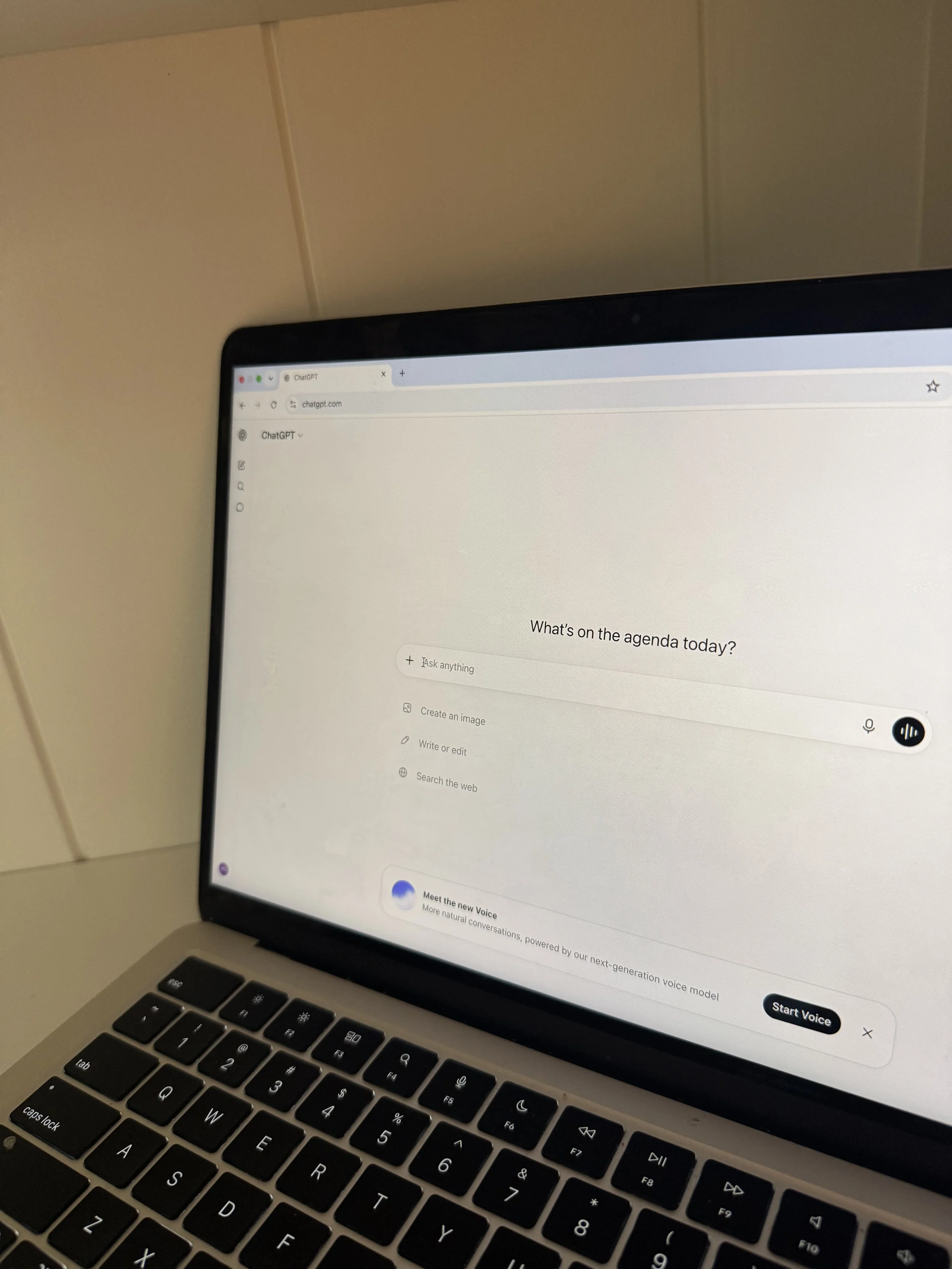
Colleges and universities across the world are being impacted by the rise of Artificial Intelligence. Students are learning in new and different ways, causing them to have broader experiences. Some schools are creating programs for students to learn how to use AI effectively in preparation for the job market. However, the accessibility of AI is tempting students to have these systems do their work for them, causing a rise in cheating. Professors assess students ability and achievement based on various assignments, and it is often difficult to determine if AI was used.
During the Winter 2025-2026 semester, a professor at Brown University decided to make his midterm and final take home exams, in light of the shooting at Brown in December. The number of students increased by 187%, going from no more than 30 students each semester to 86. Additionally, he made the midterm harder than ones in the past, as he felt that the students had ample time to think about the challenging questions. “The results of the midterm exam, which was administered on March 5, were extraordinary, with an average score of 96 out of 100. Forty students scored a perfect 100.” Professor Roberto Sorreno shared “historically the average grade in the midterm of this course has ranged between 65 and 80 [percent].” He then announced that the final would be in person, as he suspected some cheating on the midterm, but wanted the students to prove him wrong. Because of this, 18 students dropped the class, 9 students didn’t attend the midterm, 22 students scored a perfect 100, and the others scored between 96% and 40%. Because of how competitive the job market is, students feel pressure to have a strong transcript. Having access to AI tools in a take home exam setting makes it very hard for students to not take advantage of it.
Since the 1840s, Washington and Lee University has had a strong honor system defining its standard for community living, engagement, and academics. The honor system is run by the Executive Committee, members of the student body, who work to uphold the commitment and carry on the legacy. A member of the 2025-2026 Executive Committee stated, “I assume that across the country AI has been detrimental to academic honesty. However, at W&L, with our historic Honor System, this technology also opens the door to eroding decades of university tradition. It’s easier than ever before to turn in assignments that don’t accurately demonstrate your learning or effort.” Members of the Washington and Lee community are known for living honorably and chose to be part of a community that is held by these standards. AI doesn’t only pose an issue to benchmarks in academic achievements, but being part of the community entirely. A rising senior at Washington and Lee also expressed concern about how she felt misled during her freshmen year. “I feel like when I first got to Washington and Lee I fully believed that nobody cheated and I’ve since heard about many people breaking the honor system. Maybe I was naive at first, or maybe it’s because of AI making everything easier to finish, but it’s really disappointing! I know Princeton made changes to their Honor system recently and I hope ours doesn’t turn out the same way.”
The elimination of Princeton University’s 133 year long tradition of unproctored exams went into effect on July 1st. Through this, students would be held accountable for both themselves and their classmates, reporting if cheating occurred. “Much of the demand [to change the policy] came from students who felt that there was too much cheating going on. They felt they could not enforce the honor code any longer,” Kim Lane Scheppele, a professor of sociology and international affairs at Princeton, told Inside Higher Ed in an email. “AI was the breaking point.” In fact, a recent survey of 806 conducted by the chair of the Undergraduate Student Government Academics Committee revealed that 50.1% were in favor of proctored exams. Princeton University’s student run newspaper, The Princetonian, also surveyed 501 graduating seniors in 2025, finding out that 30% cheated at least once during their time at Princeton.
What is the solution? Can we incorporate artificial intelligence into our classrooms without disrupting real learning and integrity? Different disciplines may need to have different policies regarding artificial intelligence. Having a proctored exam works best for some classes and topics, but others may need another method of assessment that allows for more time and thought. It is challenging to ban AI practices on college campuses because students need to learn how to use it. Most industries are looking for recent graduates with a strong sense of artificial intelligence that can help them grow in this ever evolving landscape. However, it is crucial students are still gaining all of the necessary information from their classes. AI can serve as a quick fix in completing an assignment, but without the foundational skills it will be challenging to excel in the future.
As a rising senior at Washington and Lee University, I have seen how artificial intelligence has impacted the educational landscape. From simple tasks to more complex assignments, resources like ChatGPT and Claude are used on a daily basis. Every professor includes a section for use of artificial intelligence in their syllabus, outlining what breaks their code of cheating. It has become a great resource for students, and there are many ways our generation has an educational advantage since information is available in seconds, but I definitely worry about the impact down the line. Are college students learning and understanding the same amount of material they learned 15-20 years ago? On the flip side, it is crucial for students to know how to use artificial intelligence effectively. Most industries have been impacted by AI and students need to know how to use it to be valuable employees. Many schools have introduced, and are still introducing, programs for artificial intelligence so students can really learn these programs. I feel that these programs are great and will provide many job opportunities for students, especially those who are interested in fields that require a lot of computer skills. However, I do think it is important that colleges and universities require that all students take one class in artificial intelligence, since most industries use it. I am a Sociology major and Education Studies and Policy minors, and I took a Data Science class my junior fall. It was required of my major, but I wouldn’t have chosen to take it otherwise. I am really glad that I took the class and it was one of the classes I learned the most in. The skills I learned in that class will help me in my future career, and have made me approach artificial intelligence with more confidence. Overall, I think there are benefits and downsides to artificial intelligence, but it is crucial that educators teach students how to use it for good.
Sources:
https://apple.news/AYyZx9FSiTNWP04ovpFaUzg
https://paw.princeton.edu/article/after-133-years-princeton-going-back-proctoring-exams